
Trump: blames reshoring efforts and tariffs for medicine price reductions
Trump: US President Donald Trump said that tariffs and local investment will force a worldwide reset in pharmaceutical pricing, and he clearly connected his proposal to lower prescription medication costs with a larger trade and manufacturing strategy.
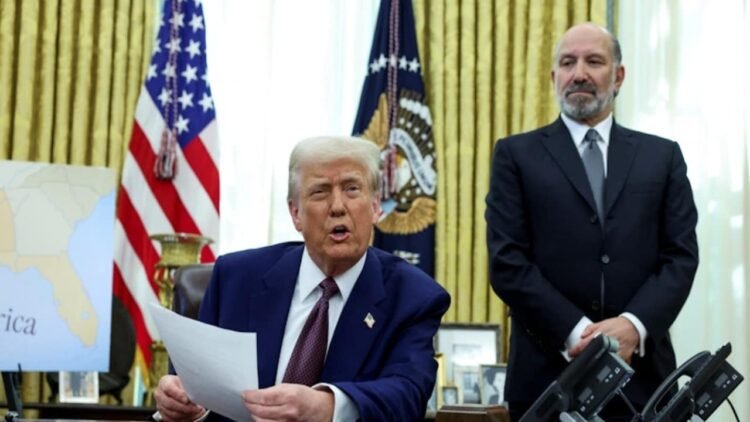
Trump referred to previous US medication prices on Friday, saying, “We were like a whipping post.” “In certain instances, we were paying a tenth of what medications sold in Europe.”
He said that only after the administration threatened to impose trade sanctions did foreign countries consent to price changes.
HHS Secretary Robert F. Kennedy Jr., Commerce Secretary Howard Lutnick, CMS Administrator Mehmet Oz, FDA Commissioner Marty Makary, and executives from large pharmaceutical companies were among the top health and commerce officials who attended Trump’s speech.
Trump said, “We’re going to have to use tariffs if you don’t do it.” “And they agreed to do it right away.”
According to Trump, pharmaceutical firms have committed to selling medications to Americans at costs that are comparable to those in other countries and distributing them via a platform supported by the government.
“Every customer will receive significant savings,” he said.
Paul Hudson of Sanofi, Vas Narasimhan of Novartis, Ashley Magargee of Genentech, Jean-Michel Boers of Boehringer Ingelheim (USA), Dan O’Day of Gilead, Emma Walmsley of GSK, Robert Davies of Merck, Bristol Myers Squibb General Counsel Cari Gallman, and Peter Griffith, Executive Vice President of Amgen, were among the executives present.
Trump promised significant domestic investment to go along with the price change.
Together, they will spend more than $150 billion to increase pharmaceutical production in the United States, he said.
Businesses were already constructing new facilities all around the nation, he said.
Trump said that “they’re building plants in all states, all over the country.”
According to Trump, the action will significantly lower healthcare expenses.
He said, “This is the biggest thing that has ever happened to drug pricing and health care.”
For a long time, discussions about innovation, trade, and national security have been linked to US medication costs. Industry leaders contend that high prices finance research, while detractors claim that consumers suffer the cost.
Using tariffs and reshoring pledges as instruments to alter international supply chains and price structures, Trump has increasingly combined trade enforcement with healthcare policy.