
Trump: flags shipments of rice from India and connects taxes to new agricultural subsidies
Trump: US President Donald Trump told a White House roundtable that tariffs will be used aggressively to defend American farmers while unveiling a multibillion-dollar farm assistance plan and intensifying his criticism of agricultural imports from India and other Asian suppliers.
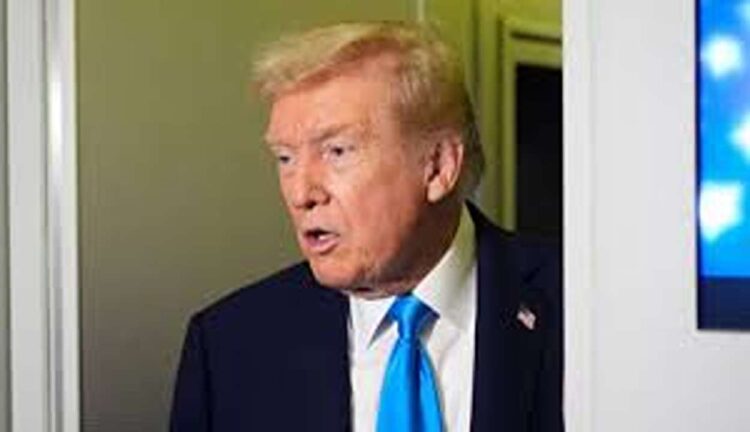
Trump said on Moday that the government will provide “$12 billion in economic assistance to American farmers,” financed by tariff payments the US is collecting from trade partners, as he opened the meeting with farmers, congressmen, and senior cabinet officials. He said that nations “took advantage of us like nobody’s ever seen” and that “if you think about it, we’re really taking in trillions of dollars.”
After what he often referred to as inherited inflation and declining commodity prices, the President presented the additional aid as crucial to stabilizing the agricultural sector. In his defense of his plan to revive US agriculture, he said that tariff leverage was essential. “Farmers are an indispensable national asset, part of the backbone of America,” he stated.
During a long debate on rice imports, which one Louisiana producer called terrible for southern producers, India came up heavily as an example.
Kennedy Rice Mill CEO Meryl Kennedy informed the President that “countries… dumping rice into this country today” were hurting the US market and that “the tariffs are working, but we need to double down.” She said that the practice was hurting home manufacturers and named “India, Thailand, [and] China into Puerto Rico” as the main suppliers of subsidized imports. Citing a WTO dispute against India, she said, “We’ve never seen imports this great” and called for more regulations.
Trump insisted on details. “What prevents India from doing that? He ordered Treasury Secretary Scott Bessent to examine possible measures after saying, “They have to pay tariffs.” Trump said, “All right, and we’ll take care of it,” when informed that “the two largest brands” in the US retail rice industry were controlled by Indian companies. That’s fantastic. It’s quite simple. Once again, tariffs provide a two-minute solution.
A more comprehensive examination of hostile trade practices impacting soybeans and other commodities also included tariffs. According to Trump, he just talked with Chinese President Xi Jinping and anticipated making significant further acquisitions. “China is purchasing an enormous quantity of soybeans,” he said. “I believe he will go above and beyond what he committed to.”
According to Bessent, China agreed to purchase “at least $12 million metric tons of US soybeans this growing season, followed by a minimum of 25 million tons annually for the next three years” as part of the Busan framework that Trump and Xi discussed. He said that Trump was “ushering in a new golden age for agriculture” and referred to the $11–12 billion agricultural package as a crucial “liquidity bridge.”
For many in the audience, worries about international competition and the future of US commodities markets were entwined with trade problems pertaining to India. Kennedy called rice “a currency in many of these countries” and asked the government to acknowledge it as “a national security issue.” She cautioned that American goods were being displaced overseas by subsidized foreign rice, especially in Puerto Rico, which used to be a significant market for grain produced in the United States.
Trump has maintained that in order to combat such abuses, tariff authority—which is now the focus of a Supreme Court case—is crucial. He linked the dispute to agricultural imports, saying, “If we had a president that said, no, you can’t do that… we would have never lost our chip industry.”
A number of farmers called for quicker action. Cordt Holub, an Iowa producer, commended Trump for the “bridge payment” and said that domestic initiatives like E15 might improve local markets. “So E15 is a big deal?” Trump said, then pledged to continue the study.
Administration officials also highlighted what they called a sharp decline in the rural economy under Biden throughout the event. According to Kevin Hassett, director of the National Economic Council, “150,000 farms closed” during the previous administration, and interest costs had increased. He said, “You wonder why we need this $11 billion, maybe $12 billion… a hole was dug in the previous administration.”
Over the last ten years, there has been an increase in agricultural commerce between the US and India. The US imports almonds, cotton, and pulses, while India exports basmati, rice products, spices, and marine goods. Bilateral discussions have sometimes been hampered by disagreements over subsidies, market access, and WTO complaints, especially those pertaining to rice and sugar.
China continues to be the biggest purchaser of US soybeans, and since 2018, volatility associated with tariffs has influenced global commodities flows. Trump’s increased dependence on tariffs suggests that Asian agricultural exporters may face difficulties in the coming months.