
US: legislators propose a Congressional resolution to remove 50% of India’s tariffs
US: In the US House of Representatives, a number of powerful Democratic members have proposed a resolution to remove the 50% duty on Indian imports, which they claim is unlawful and detrimental to the country’s economy.
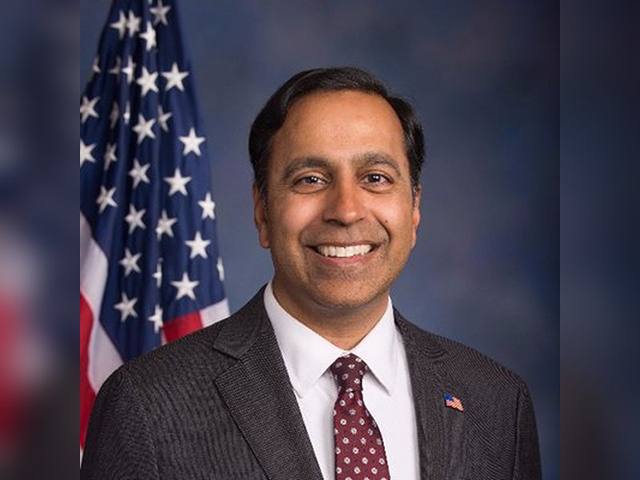
The resolution, spearheaded by Indian American Congressman Raja Krishnamoorthi, Congresswoman Deborah Ross, and Congressman Marc Veasey, seeks to end President Donald Trump’s national emergency that permits tariffs of up to 50% on Indian imports, which they characterize as unlawful and detrimental to the economy.
The move comes after a Senate-passed, bipartisan bill to lift tariffs on Brazil and stop what legislators believe is the president abusing emergency powers to increase import taxes.
The resolution would limit President Trump’s use of the International Emergency Economic Powers Act (IEEPA) to impose broad tariffs on Indian goods, according to the resolution’s authors. Additionally, it would repeal the extra 25% “secondary” charges that were applied on top of previous reciprocal tariffs and went into force on August 27. When taken as a whole, the measures increased levies on a number of commodities with Indian origins to as much as 50%.
Congressman Krishnamoorthi said, “President Trump’s reckless tariff policy toward India is a counterproductive approach that weakens a critical partnership.” These levies hurt American jobs, interfere with supply chains, and increase consumer prices rather than furthering American security or interests. The United States will be able to interact with India to further our common economic and security goals if these detrimental tariffs are lifted,” he said.
Ross said that places like North Carolina, which has strong business and social links to India, are immediately feeling the effects of the tariffs, which go beyond Washington’s discussions on trade policy.
“Through trade, investment, and a thriving Indian American community, North Carolina’s economy is deeply connected to India,” she said. “Thousands of well-paying jobs have been created in our state by Indian companies investing over a billion dollars, particularly in the life sciences and technology sectors of the Research Triangle.”
According to Ross, the connection is reciprocal, with North Carolina producers sending significant amounts of their products to India annually.
“In the meantime, North Carolina producers send hundreds of millions of dollars’ worth of goods to India annually, including chemicals, pharmaceuticals, and sophisticated machinery,” Ross said. “Trump jeopardizes North Carolina jobs, innovation, and our long-term competitiveness when he destabilizes this relationship with illegal tariffs.”
In a statement, Veasey emphasized how the tariffs would affect consumers, especially in light of the country’s overall affordability issues. “These illegal tariffs are a tax on everyday North Texans who are already struggling with affordability at every level, and India is an important cultural, economic, and strategic partner,” he added.
The three congressmen have become prominent voices in Congress, demanding a change in US-India ties and opposing the Trump administration’s tariff policy.
Along with Congressman Ro Khanna of California and 19 other members of the House, Ross, Veasey, and Krishnamoorthi urged President Trump in October to reverse trade policies they believe to be detrimental and to mend what they saw as America’s troubled relationship with India.
The resolution’s proponents contend that imposing broad tariffs using emergency powers circumvents legislative authority and causes uncertainty for companies and employees on both sides of the trade relationship.
They claim that lifting the tariffs on India is part of a larger effort to stabilize US economic ties with important allies and prevent the president from “using emergency powers to unilaterally impose his misguided trade policies.”