
Trump: issues an executive order that targets proxy advisers with foreign ownership
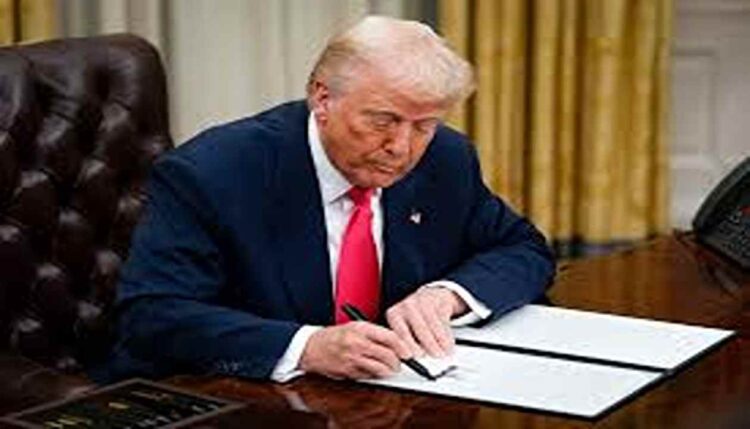
Trump: President Donald Trump issued an executive order mandating extensive regulatory and enforcement inspections of the proxy consulting business, claiming that two foreign-owned companies have an excessive amount of influence over corporate governance in the United States.
Glass, Lewis & Co., LLC and Institutional Shareholder Services Inc. are the subject of the order, Protecting American Investors from Foreign-Owned and Politically-Motivated Proxy Advisors, which claims that they “control more than 90 percent of the proxy advisor market” and “play a significant role in shaping the policies and priorities of America’s largest companies through the shareholder voting process.”
According to the order, these firms advise clients on how to vote “the enormous numbers of shares their clients hold and manage on behalf of millions of Americans in mutual funds and exchange traded funds,” which frequently amount to “a significant ownership stake in the United States’ largest publicly traded companies.” This is “unbeknownst to many Americans.” It goes on to say that its customers “frequently heed the advice of the proxy advisors.”
Accordingly, proxy advisors “wield enormous influence over corporate governance matters, including shareholder proposals, board composition, and executive compensation,” as well as over “capital markets and the value of Americans’ investments more generally, including 401(k)s, IRAs, and other retirement investment vehicles,” according to the decision.
Trump’s executive order charges the companies with using their power to “advance and prioritize radical politically-motivated agendas – like ‘diversity, equity, and inclusion’ and ‘environmental, social, and governance’ – even though investor returns should be the only priority.”
It mentions that one company “continues to provide guidance based on the racial or ethnic diversity of corporate boards” and cites support for shareholder motions mandating that businesses do “racial equity audits” and “significantly reduce greenhouse gas emissions.”
The United States “must therefore increase oversight of and take action to restore public confidence in the proxy advisor industry, including by promoting accountability, transparency, and competition,” according to the order, which also highlights “significant concerns about conflicts of interest and the quality of their recommendations.”
Trump therefore gives the Securities and Exchange Commission Chairman instructions to examine “all rules, regulations, guidance, bulletins, and memoranda relating to proxy advisors” and contemplate amending or rescinding those that are “inconsistent with the purpose of this order,” especially those that involve “diversity, equity, and inclusion” and “environmental, social, and governance” policies.
Additionally, the SEC is requested to enforce the anti-fraud provisions of federal securities laws for “material misstatements or omissions contained in proxy advisors’ proxy voting recommendations” and to review modifications to shareholder proposal regulations, particularly Rule 14a-8.
In addition to reviewing ongoing state antitrust investigations, it directs the Federal Trade Commission—after consulting with the Attorney General—to look into whether proxy advisors damage US consumers through “unfair methods of competition or unfair or deceptive acts or practices,” such as “failing to adequately disclose conflicts of interest” or “providing misleading or inaccurate information.”
Additionally, in order to improve transparency regarding the use of proxy advisors in pension and retirement plans, the Department of Labor is required to examine and possibly update guidance under the Employee Retirement Income Security Act, including whether or not proxy advisors should be regarded as fiduciaries and whether or not they act “solely in the financial interests of plan participants.”
In the global financial markets, proxy advice services are essential, especially for big US-listed businesses with substantial foreign ownership and engagement from overseas investors.
Institutional investors throughout the globe, particularly those with exposure to US stocks from developing countries like India, keenly monitor their recommendations.