
Trump: In order to prevent the “patchwork” of state AI regulations, issues an executive order and calls for a uniform national norm
Trump: In order to prevent a “patchwork” of state-level artificial intelligence regulations, US President Donald Trump signed a comprehensive Executive Order Thursday (local time). He claimed that inconsistent regulations jeopardize American innovation and reduce the nation’s ability to compete globally in emerging technologies.
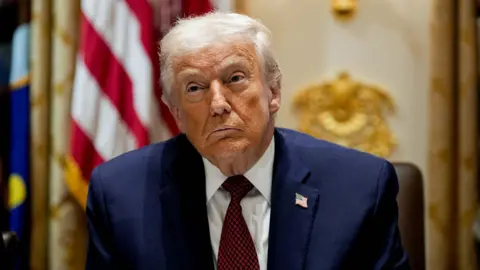
The directive is intended to protect AI developers from what it described as onerous and contradictory state regulations, while opening the door for a single national framework to regulate AI research and implementation, the White House said in its fact sheet after the order was issued.
A new AI Litigation Task Force will be formed by the US Attorney General in accordance with the direction to contest state legislation that are thought to be unlawful, preempted, or detrimental to innovation.
States that have AI legislation that are in contradiction with national aims risk having their Broadband Equity, Access, and Deployment (BEAD) money withdrawn, and the US Secretary of Commerce has been entrusted with assessing these laws.
“The Order directs the Attorney General to establish an AI Litigation Task Force to challenge unconstitutional, preempted, or otherwise unlawful State AI laws that harm innovation,” the factsheet said.
“The Order instructs the Secretary of Commerce to withhold non-deployment Broadband Equity Access and Deployment (BEAD) money from any State with AI laws that are in contradiction with national AI policy aims and to publish an assessment of those laws. “An absence of similar laws or a policy of enforcement discretion with respect to any existing such laws should be considered by other agencies as a condition of applicable discretionary grant programs,” the statement said.
Additionally, the decision instructs the Federal Communications Commission (FCC) and the Federal Trade Commission (FTC) to investigate whether state regulations, such as mandated DEI-based modifications to AI models, might compel businesses to engage in activities that are illegal under federal law.
A federal reporting and disclosure criteria for AI systems will also be considered by the authorities.
According to the White House, the executive order advances the administration’s proposal for a national legislative framework that would supersede state laws that are seen to be anti-innovation or restrictive.
“The Order calls for the development of a national AI legislative framework that would preempt State AI laws that stifle innovation,” it said.
The government cautioned that over 1,000 state-level AI laws had been submitted nationally, creating what officials characterized as a chaotic regulatory environment, and called the action crucial to US economic prosperity and national security.
“States such as California and Colorado are considering requiring AI companies to censor outputs and insert left-wing ideology in their programming,” the leaflet said.
“The most restrictive states should not be allowed to dictate national AI policy at the expense of America’s domination of this new frontier,” it said.
In a statement, Trump restated his position and cautioned that excessive state regulation might impede the development of AI in the United States.
“Instead of a patchwork of fifty state regulatory regimes, we MUST have a single federal standard. China would quickly overtake us in the AI race if we don’t,” he said.
In order to safeguard children from deepfake abuse, the Trump administration signed the Take It Down Act earlier this year, and the July 2025 directive prohibiting government agencies from employing AI systems that include “ideological biases” is a step that the order builds upon.
The administration stated that Thursday’s decision advances its AI Action Plan, which was introduced in July 2025 and called for removing regulatory barriers to guarantee that the US continues to lead the world in artificial intelligence.