
Chaos Inside Mexico City Congress: Lawmakers’ Debate Turns Into Physical Confrontation
Chaos Inside Mexico City Congress: A tense political atmosphere inside the Mexico City legislative chamber escalated dramatically when a routine debate transformed into a physical confrontation among lawmakers. What began as a verbal disagreement over government policy soon spiraled into scenes of pushing, shouting, and disorder on the session floor. The incident, captured on video and widely circulated, has raised serious concerns about legislative conduct, democratic norms, and political polarization within the city’s governance system.
Background of the Legislative Dispute
The confrontation erupted during a debate on a controversial bill related to institutional restructuring. The proposal aimed to dissolve the city’s existing transparency body and replace it with a new oversight authority. Supporters of the bill argued that the reform would streamline governance and improve accountability. However, critics viewed it as a threat to transparency and an attempt to weaken independent oversight mechanisms.
https://x.com/RapidReport2025/status/2000672649299497438?s=20
This disagreement created a charged environment inside the chamber, with lawmakers from opposing political ideologies firmly entrenched in their positions. The debate intensified as accusations of procedural violations and misuse of power were exchanged across the floor.
What Triggered the Physical Clash
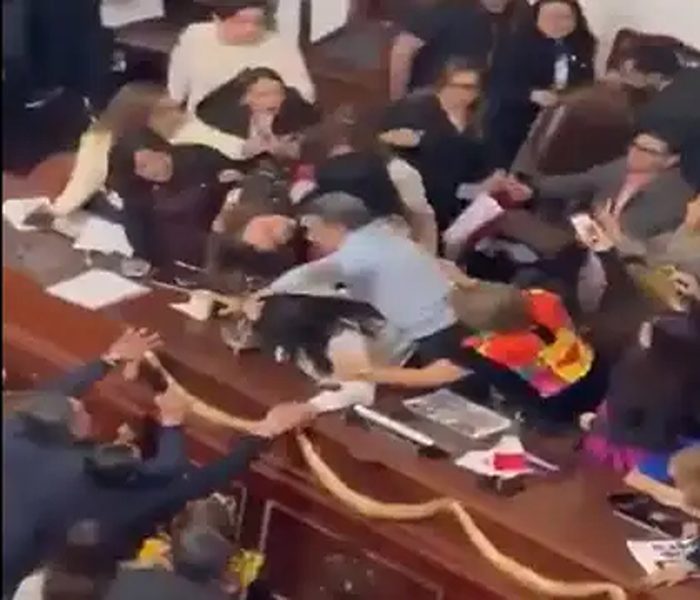
The situation took a dramatic turn when several lawmakers attempted to approach the main podium simultaneously. Video footage from inside the chamber shows at least five legislators pushing forward, shouting over one another in an effort to control the proceedings. As tensions flared, physical contact became unavoidable, and the confrontation quickly escalated beyond verbal protests.
Security personnel and fellow legislators attempted to intervene, but the chaos continued for several moments. Lawmakers were seen pushing opponents away, grabbing hands, and even pulling hair in an effort to block access to the podium. The disorder disrupted the session entirely and shocked observers both inside and outside the chamber.
Role of Opposition Lawmakers
According to reports, the initial protest was led by female deputies from the National Action Party, a right-leaning political group. These lawmakers approached the podium to express their opposition, claiming that the ruling party had violated legislative rules during the session. Their action was intended as a symbolic protest to halt proceedings and draw attention to what they described as an abuse of process.
The opposition lawmakers maintained that their approach to the podium was peaceful and did not involve physical aggression. They argued that their intention was to defend institutional norms and ensure fair debate within the legislative framework.
Response from the Ruling Party
Lawmakers from the ruling left-leaning party, Morena, responded by attempting to force the opposition deputies away from the podium. When the protesters refused to step aside, the confrontation intensified. What followed was a scuffle marked by elbowing, slapping, and forceful attempts to regain control of the session.
Members from both sides accused each other of initiating violence. The ruling party defended its actions as necessary to restore order and continue legislative work, while opposition figures claimed excessive force was used to silence dissent.
Statements and Political Reactions
Andres Atayde, an aide to PAN legislators, stated that the opposition lawmakers had taken over the podium peacefully and without physical contact. He alleged that the majority faction chose to retake control through violent means rather than dialogue. These remarks, reported by local media, further fueled public debate over accountability and the use of force within democratic institutions.
Political analysts have noted that the incident reflects deeper issues of polarization and mistrust between rival parties. The lack of effective conflict resolution mechanisms within the chamber has also been highlighted as a contributing factor to the escalation.
Impact on Public Trust and Governance
The brawl has sparked widespread criticism and concern among citizens, civil society groups, and political commentators. Many fear that such incidents undermine public confidence in democratic institutions and distract from substantive policy discussions. Calls for disciplinary action, ethical reviews, and procedural reforms have emerged in the aftermath of the clash.
As investigations and internal reviews continue, the incident serves as a stark reminder of the fragile nature of political discourse when institutional respect breaks down. Restoring decorum and constructive dialogue within the legislative process remains a pressing challenge for Mexico City’s political leadership.