
Rural job scheme: The TG government’s finances will be impacted by a new rural employment program
Rural job scheme: The Telangana government is worried that the Mahatma Gandhi National Rural Employment Guarantee Act (MGNREGA) would be replaced with a new rural employment law that will put more financial strain on the state coffers to sustain the program. Concerns about financial hardship have arisen as a result of the measure, which aims to give 40% of the revenues from the state budget.
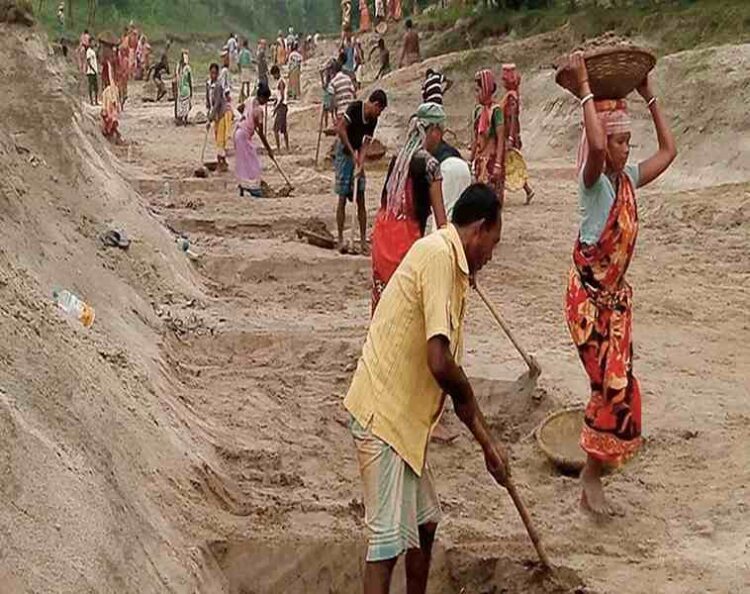
According to officials, the financing of the new program is one of the main improvements introduced by the Viksit Bharat–Guarantee for Rozgar and Ajeevika Mission (Gramin) (VB-G Ram G) Bill. States will now have to split the cost of paying wages under the VB-G Ram G, in contrast to MGNREGA, when the Center was in charge of covering the whole wage bill for unskilled manual labor.
“For the purposes of this Act, the fund-sharing pattern between the Centre and the state governments shall be 60:40 for all other states and Union territories with legislature,” authorities said. According to them, the proposed draft also includes clauses that would temporarily suspend the job guarantee for up to 60 days during the busiest farming seasons. Facilitating “adequate agricultural labor availability during peak agricultural seasons” is the goal of this clause. Officials pointed out that in addition to the rules of the program, state governments would need to provide jobs for the workers throughout the agricultural season.
According to State Panchayat Raj Minister Sitakka, the central government made these harsh decisions with the deliberate goal of undermining this historic scheme, which was implemented by the UPA government at the time with admirable goals like ensuring the rural poor had a stable source of income, lowering migration, and developing rural infrastructure.
According to the Minister, it is unjust for the federal government, which had previously executed the program by allocating 100% of the funding for unskilled wages, to now only provide 60% of the cash and leave the states to bear the remaining 40%. She criticized this move, claiming that it is an effort by the central government to avoid its obligations and that it would have a significant negative effect on the states’ financial situation.
Sitakka emphasized that the BJP federal government has never given more than 42 days of labor in a year, despite the legislation requiring every rural poor family to get 100 days of employment.