
OppositionUnity – INDIA Alliance Plans Joint Action on Electoral and Exam Issues
OppositionUnity – Opposition parties belonging to the INDIA alliance have agreed to intensify their campaign against the central government by raising concerns over alleged irregularities linked to electoral processes and examination administration. During a meeting held in New Delhi on Monday, leaders from several opposition parties reached a consensus on key issues they intend to pursue collectively in the coming weeks.
Joint Resolution After Extended Deliberations
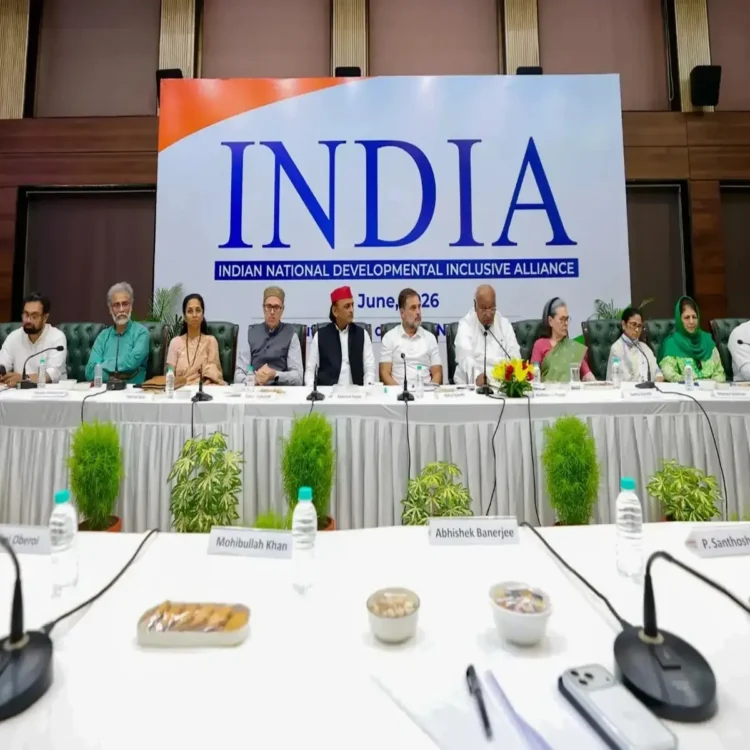
The gathering took place at the Constitution Club in the national capital and lasted for more than two and a half hours. Representatives from 22 opposition parties, along with Independent Rajya Sabha member Kapil Sibal, participated in detailed discussions focused on strengthening coordination among alliance partners and formulating a common political strategy.
At the conclusion of the meeting, leaders announced their intention to seek the immediate resignation of Union Education Minister Dharmendra Pradhan in connection with the controversy surrounding the alleged NEET-CBSE examination paper leak. The issue has been repeatedly raised by opposition parties, which have demanded greater accountability in the management of national-level examinations.
Letter to Chief Justice Planned
Speaking to reporters after the discussions, Congress president Mallikarjun Kharge said the alliance had decided to approach the Chief Justice of India regarding concerns over the Special Intensive Revision (SIR) of electoral rolls. Opposition leaders have alleged irregularities in the process and claimed that voter-related discrepancies require judicial attention.
Kharge stated that a formal communication would be sent to the country’s highest judicial authority, outlining concerns related to the voter revision exercise and allegations of electoral malpractice. According to him, alliance members believe the matter deserves independent examination.
Focus on Strengthening Opposition Unity
A major part of the meeting centered on improving coordination among opposition parties and reinforcing unity ahead of future political challenges. Leaders reportedly emphasized the need to work together despite differences and maintain a collective approach against the Bharatiya Janata Party (BJP).
Sources familiar with the discussions indicated that Congress leader Rahul Gandhi highlighted the importance of bringing all opposition forces together through mutual trust and cooperation. He is said to have stressed that unity would be essential for the alliance’s future political efforts.
Regional Parties Seek Greater Cooperation
Samajwadi Party chief Akhilesh Yadav reportedly raised concerns about alleged electoral irregularities and urged larger opposition parties to support influential regional forces. He emphasized the importance of cooperation among alliance partners and called for a broader strategy that accommodates regional political strengths.
The discussions also reflected efforts to address internal differences that emerged following recent Assembly election setbacks faced by some alliance constituents, including the Trinamool Congress in West Bengal and the DMK in Tamil Nadu.
Attendance Highlights Alliance Dynamics
Several prominent opposition leaders participated in the meeting. Among those present were Congress parliamentary leader Sonia Gandhi, Trinamool Congress leaders Mamata Banerjee and Abhishek Banerjee, Samajwadi Party chief Akhilesh Yadav, Rashtriya Janata Dal leader Tejashwi Yadav, National Conference leader Omar Abdullah, and People’s Democratic Party chief Mehbooba Mufti.
Shiv Sena (UBT) leader Uddhav Thackeray also attended the discussions, while Jharkhand Mukti Morcha leader Hemant Soren joined virtually. Leaders from Left parties were also part of the deliberations.
However, the DMK, a significant member of the INDIA alliance, was not represented at the meeting. Meanwhile, the Aam Aadmi Party remained away from the coalition’s activities, continuing its distance from the grouping.
The meeting underscored the opposition’s efforts to present a coordinated political front while pursuing concerns related to electoral processes and educational governance through both political and institutional channels.