
Diplomacy – India Rebukes Pakistan Over UN Remarks on Militancy Claims
Diplomacy – India has sharply criticised Pakistan at the United Nations, accusing it of spreading state-backed misinformation by assigning a controversial label to militant organisations operating within its own territory. The remarks were made during a United Nations Security Council discussion focused on developments in Afghanistan, where India argued that Pakistan was attempting to shift responsibility for its internal security challenges.
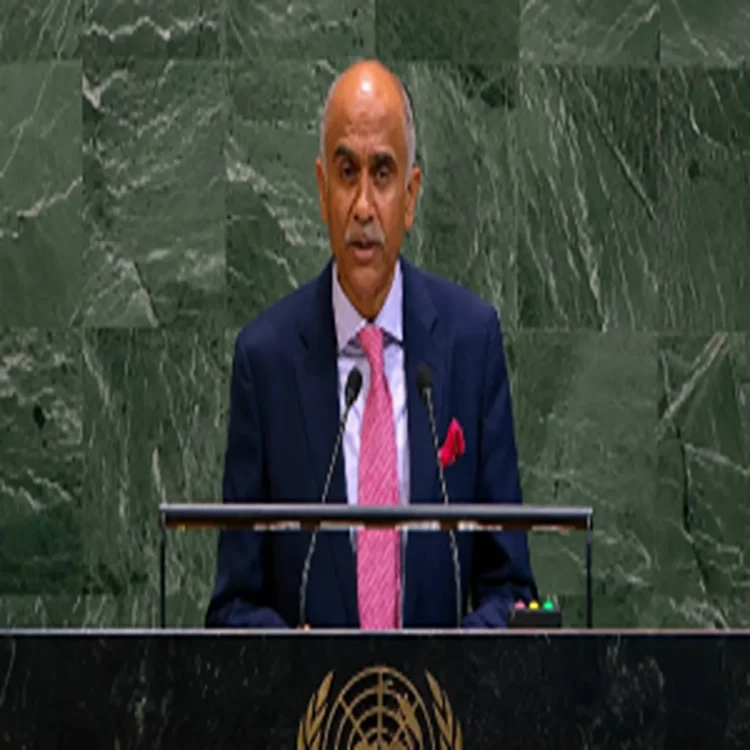
India Challenges Pakistan’s Allegations
Representing India at the UN, Ambassador Parvathaneni Harish rejected Pakistan’s claims that several militant groups were acting under Indian influence. According to India, Islamabad has repeatedly promoted such allegations without presenting credible evidence to support them. New Delhi maintained that these assertions were intended to create a misleading narrative for both domestic and international audiences.
The Indian envoy stated that Pakistan’s decision to formally direct government institutions to refer to certain groups by a new designation was an example of official misinformation presented through religious terminology. He argued that the move was designed to divert attention rather than address the real causes of instability.
Accusations of Political Diversion
During his address, Ambassador Harish said the campaign reflected a broader effort to maintain hostility toward India. He suggested that Pakistan’s leadership was using external issues to draw focus away from ongoing political and economic difficulties within the country.
According to the Indian representative, blaming neighbouring nations for internal challenges has become a recurring pattern. He also criticised the increasing influence of Pakistan’s military establishment in governance, citing recent constitutional developments as evidence of expanding military authority over civilian institutions.
Concerns Over Cross-Border Military Operations
India also raised concerns regarding Pakistan’s military actions across the Afghan border. The envoy accused Islamabad of being responsible for civilian casualties resulting from air operations conducted inside Afghanistan.
Harish stressed that civilian deaths cannot be justified under the banner of counter-terrorism. He argued that military actions leading to the loss of innocent lives, including women and children, should not be portrayed as legitimate security operations. The Indian representative further questioned the consistency of Pakistan’s public positions on international law and regional solidarity while carrying out such operations.
Rising Tensions Between Pakistan and Afghanistan
The exchange at the United Nations comes at a time of heightened tensions between Pakistan and Afghanistan. Relations between the neighbouring countries have deteriorated significantly following a series of border incidents and military confrontations.
Earlier this year, United Nations records indicated that Pakistani airstrikes inside Afghan territory resulted in the deaths of at least 13 civilians. Those killed reportedly included women and children, leading to one of the most serious border disputes seen in recent years.
Humanitarian Impact of Border Conflict
UN assessments released in subsequent months showed that continued military activity and retaliatory actions along the border had severe humanitarian consequences. Reports documented at least 42 civilian deaths and more than 100 injuries linked to the violence. In addition, over 100,000 people were reportedly displaced from their homes due to the worsening security situation.
The crisis intensified further after Afghan authorities alleged that a Pakistani airstrike targeting a drug rehabilitation facility in Kabul caused hundreds of fatalities. While casualty figures remain disputed, the United Nations independently confirmed a substantial number of deaths linked to the incident.
Fragile Calm Along the Frontier
Although diplomatic efforts and temporary ceasefire measures helped prevent a broader military confrontation, tensions remain unresolved. Sporadic clashes and security incidents continue to be reported along the Pakistan-Afghanistan border, highlighting the fragile nature of peace in the region.
The latest exchange at the United Nations underscores the deep divisions between the countries involved and reflects ongoing concerns about regional security, civilian protection, and cross-border stability.