
Security – UN Council Set to Vote on Revised Hormuz Passage Plan
Security – The United Nations Security Council is expected to vote on Friday on a revised resolution aimed at safeguarding navigation through the Strait of Hormuz, a vital global shipping route. The proposal, introduced by Bahrain, has undergone notable changes after facing resistance from key members, particularly China and Russia, over provisions that could have enabled military intervention.
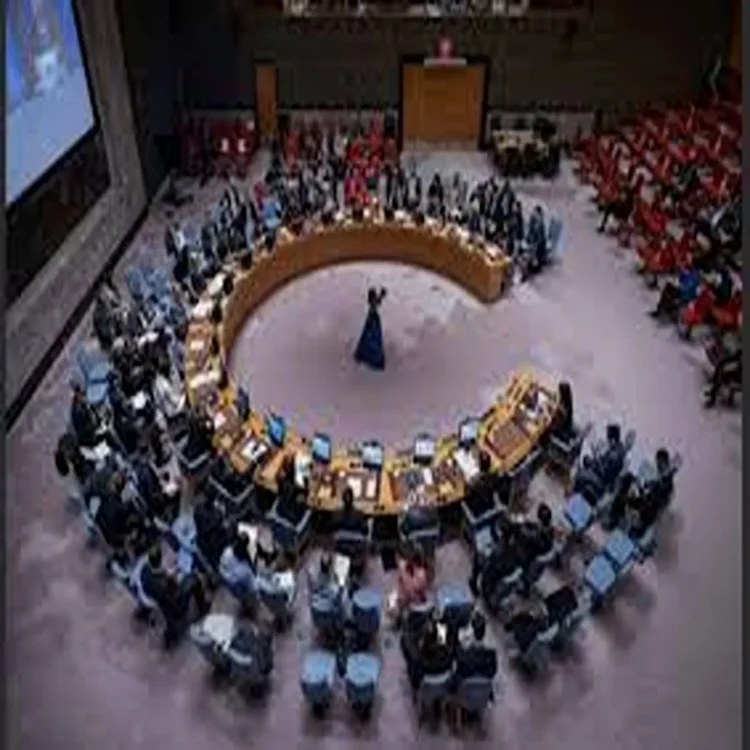
Revised Draft Focuses on Defensive Measures
According to the latest version of the resolution reviewed on Thursday, the text now permits only defensive actions to ensure safe maritime transit. Earlier language that could have allowed broader military engagement has been removed. The Strait of Hormuz remains a critical corridor, with roughly 20 percent of the world’s oil supply passing through it. Recent disruptions linked to Iran’s actions during the ongoing conflict have pushed global energy prices upward.
Initially, Bahrain’s draft had called for authorization to use “all necessary means” to secure shipping lanes across the Strait of Hormuz and nearby waters, including the Gulf and the Gulf of Oman. Such phrasing in United Nations resolutions is typically interpreted as allowing military force. However, opposition from several permanent members led to a more limited approach in the final draft.
Opposition From Key Security Council Members
Russia, China, and France—three of the five permanent members with veto power—had raised concerns over the earlier proposal. While their final stance on the revised draft remains unclear, their earlier objections played a significant role in shaping the current version.
The updated text now emphasizes “defensive means necessary and proportionate to the circumstances” to maintain open shipping routes and prevent interference with international navigation. These measures would be permitted for an initial period of at least six months. Countries may act independently or as part of multinational naval coalitions, provided they inform the Security Council in advance.
Calls for De-escalation Continue
Diplomatic tensions remain high amid ongoing military developments in the region. U.S. President Donald Trump recently stated that the United States and Israel would intensify strikes against Iran over the coming weeks, though he did not specify a timeline for ending the conflict. Iran has continued its retaliatory actions, including restricting access through the Strait, which has become a focal point of global concern.
Russia’s ambassador to the United Nations, Vassily Nebenzia, indicated that the revised proposal does not fully address the root of the crisis. He stressed that a meaningful solution would require an end to hostilities rather than measures focused solely on maritime security.
China’s ambassador, Fu Cong, had earlier criticized the initial draft for potentially enabling what he described as unlawful and broad use of force. He warned that such measures could worsen tensions and urged council members to prioritize dialogue and diplomatic solutions.
France also advocated for restraint. Ambassador Jérôme Bonnafont highlighted the importance of avoiding escalation and suggested that measures limited to defense could be a more acceptable path forward. His remarks indicated cautious support for the revised approach.
Background of Recent UN Actions
The current resolution follows a previous measure adopted by the Security Council on March 11, also sponsored by Bahrain. That resolution condemned Iran’s attacks on Gulf nations and called for an immediate halt to its military actions. It was passed with 13 votes in favor, while Russia and China chose to abstain.
The earlier resolution also labeled Iran’s interference in the Strait of Hormuz as a threat to international peace and security. It urged all parties to cease actions that disrupt global shipping and contribute to instability in the region.
Friday’s vote is expected to draw close attention from governments and markets alike, as the outcome may influence both regional security dynamics and global energy flows.